Wednesday, June 22

Ageing Gracefully: The 3DS Virtual Console and Nostalgia's Warm Embrace

E3 2006 was rough for Sony fanboys, even more so for those from Australia. A $599 US dollar price for the Playstation 3 meant that it would  cost about $1000 for Aussies to see Sony's vision for next generation console gaming. There wasn't any hint of a worthwhile launch line-up either, with Genji and a stripped-down Gran Turismo placed in front of the gaming media's harsh spotlight. For me this meant one of two things:
  1. Start saving - which was not really possible given my penchant for impulse purchases and alcoholic beverages coupled with a meagre income that barely managed to support my tertiary studies.
  2. Look to the competition

I tried saving; I really did. I even made a deposit on a shiny, black baby that was due in November of the same year. After the launch was delayed in Australia, however, I had to face facts: it would be Nintendo or Microsoft.  At first my money was on Nintendo. Being a sucker for nostalgia, the allure of the Virtual Console coupled with Solid Snake's appearance in the Super Smash Brothers Brawl trailer had me ready to part with my cash and loyalty. Ultimately, I went with the Xbox 360 after some creative contractual arrangements entitled me to the console at no out-of pocket expense upon purchasing a new phone.

I did eventually purchase a Wii though; pretty soon after launch too. The Virtual Console failed to live up to expectations on account of ridiculously-high prices, a stingy array of titles and painfully-slow infrastructure. My dream of a perfect future with cheap, readily-available games from consoles of generations past did not materialize. Dejected, I traded my white, motion-controlled elephant towards some 360 games.

Fast forward four years and the Wii once again made its way into my house. The Virtual Console still disappoints, but I found some Wii Points cards on clearance to ease the pain. I also endured the meagre launch of the 3DS on the promise of classic portable gaming experiences. I never owned a Game Boy, but my God, did I want one. The black and white games didn't look too great, but titles like Tetris, WWF Superstars and Super Mario Land 2 were just as addictive as their 8-Bit home console counterparts.

 Pythons, warriors and fluorescent tights: Wrestling at its best.

Let's travel back in time again for my eighth birthday. My loving parents had hinted that I would be receiving a portable console as a reward for being slightly older. There were three possibilities: the Atari Lynx, the aforementioned Game Boy and the Sega Game Gear. My pick was Sega's full-colour machine, and thankfully, Mum and Dad concurred. I loved that machine and my sole game,  Castle of Illusion Starring Mickey Mouse, but compared to the Game Boy, the Game Gear lacked many other killer apps (call Castle of Illusion anything less than a system seller and you'll have me to deal with!). It lacked pretty much any other apps for that matter. The 3DS Virtual Console however, boasts Game Boy, Game Boy Colour and Game Gear support. That means that there's the slimmest of chances that this Disney classic may may make it onto my new handheld device. It also means that I'll be spending more money on old games.

 Best. Licensed. Game. Ever!
The 3DS Virtual Console has now launched - once again after a delay - without Game Gear support at the ready. Not even Super Mario Land 2 was available at launch. Two weeks in and we only have five games. We do have the former's predecessor though, and a good enough idea of Nintendo's pricing strategy: larceny. Game Boy and Game Boy Colour games are priced at either $4.50, $6 or $9 each while DSiWare can go into double figures. As cynical as I can be, I'm happy to front up with the funds after taking a dip. Super Mario Land may be subject to some questionable physics and design (seriously, Ancient Egypt, flying saucers and submarines?), but there's a powerful sense of whimsy and nostalgia in a monochromatic display. That and old 2D platformers will continue to rock my socks off.

Still there are questions about the service that can't be ignored:
  • Firstly, where are the Game Boy Advance Games? It's not like the 3DS can accept GBA cartridges, so it would make sense to offer titles from the console's storied back catalogue.
  • Why no support for classic home consoles? The 3DS has six buttons available, so that's enough to play Sega Mega Drive (Genesis), Master System, SNES and NES games with a minimum of fuss. I had a Sega Master System Converter for my Game Gear, so - at the moment - my Game Gear has the potential to offer as much support for retro games as the 3DS (Never mind that it doesn't work anymore, that's irrelevant).
  • Why offer less than a handful of titles a week? I understand Nintendo wouldn't want to overwhelm consumers, but the Virtual Console should presumably appeal to older gamers who have more disposable income. I'd very much like to see some Pokemon games and some other recognisable IPs represented on the service ASAP. Nintendo seems to be making the argument that for one to age gracefully, they must not be cheap or put out too much; works for people, not eCommerce channels.  
  • Seriously, where is Tetris? I'm not talking about a DSiWare version either: I want the monochromatic classic that made me jealous of my Game Boy-owning friends despite the fact I had a full colour display on my Game Gear.
The Master Gear: The clunkier, though more-effective Virtual Console

I'm affording the portable iteration of the Virtual Console a brief honeymoon period. With new titles trickling in at less than a handful a week, I have no doubt that my patience will depreciate if I don't see some of a certain blue hedgehog's adventures soon enough.   

Has anyone else trialled the handheld VC? Are any of you immune to nostalgia's warm pull?

Monday, June 20

In case you haven't played it: inFamous 2 Review (PS3)

The original inFamous was an interesting beast. It started off strong: with an original aesthetic, solid third-person shooting and exploratory platforming but lost it's way into the second act. The painfully-frustrating side quests, inconsistent difficulty and almost complete lack of pacing caused me to lose interest (although I did return one year on to finally complete it). Cole McGrath was an interesting protagonist, he wasn't muscle-bound, foul-mouthed or overly arrogant: he seemed human. The supporting cast was nowhere near as strong however, with Zeke Dunbar ranking as one of the most irritating and disingenuous characters I've come across. Moya and Trish also failed to be overly endearing and their fates didn't mean a great deal to me while playing as a hero or villain. Funnily enough though, upon announcing the sequel, developers Sucker Punch opted to make changes to the protagonist's look in order for him to appeal to a broader audience. Thankfully, the fans (and trolls) protested, and Cole was again returned to a gritty, almost ugly state. After some time with the beta, I had feared that inFamous 2 would be a clumsy mess: the camera hugged the player too tightly, and New Marais was nowhere near as cold and desolate as Empire City. Thankfully, those fears were unqualified and the game proved to be a great sequel, and a brilliant sandbox superhero game in its own right. inFamous 2 continues to chronicle Cole's battle against "The Beast," which is tearing a destructive path down the East Coast of the United States. Read on for more thoughts on superpowers, inconsistent plot and pacing, deadly firearms and an expansive new environment.

The Good
Freedom of movement - Particularly towards the end of the game, no other sandbox titles make movement anywhere near as joyful as inFamous 2. Thankfully, Static Thrusters - which allow for players to slow their descent - are available from the beginning of their game; but their eventual upgrade coupled with the Lightning Tether - which is essentially a grappling hook - ensures that flying around New Marais is as fun as it is simple.

Time flies when you're hanging with Cole

Rewarding story - Sucker Punch should be applauded for creating a real sense of continuity with this sequel. Not only are you given an XP boost if you've completed the first game and other trophy-related milestones, but much like Mass Effect 2, choices made in the first instalment also carry over to the sequel, which is great to see. Furthermore, while I can only speak in terms of the Good side of the story, inFamous 2 has a definitive ending. It is so satisfying to complete a game and not be slapped in the face by a teaser for the next installment as a "reward," for all of my hard work. There are some missteps throughout the campaign, but on the whole I was very happy with the story and the various nods to the original. It's also worth noting that Zeke is far more bearable in the sequel, and his character is even redeemed somewhat towards the end.

Hell of a city - New Marais has three distinctly different areas that are a joy to explore. The city centre is heavily-populated with party-goers and tourists. The mass of neon signs and parkland draws parallels to Empire City, but New Marais does have a genuinely different feel to the cityscape of its predecessor. Flood Town is such a drastic change in terms of visuals and pace from the standard New Orleans-esque landscape of the city centre, with structures submerged in deadly - to Cole at least - water. The Gas Works is a large industrial space which is home to many silos, warehouses and towering structures. It's a little dull in this quarter of town, but the larger buildings allow for some experimentation in terms of travel. All things considered, the play area in inFamous 2 is sufficiently different to that found in the original game. It's also worth mentioning that the entire city looks amazing, with an expanded colour palette, impressive draw distance and lighting effects. Even with dozens of enemies and civilians on screen - including some of the larger monsters - the frame rate rarely staggered. inFamous 2 is easily one of the best looking sandbox action titles released on current generation hardware.

Like a Boss - inFamous 2 is all about the boss fights. So much so that it makes you experience each of them at least twice. Most of the imposing boss creatures are then woven into side missions, or can even be found wreaking havoc as you traverse New Marais. As each of them can be bested by remembering simple patterns and weak spots; they are usually enjoyable and rarely cheap. Even the helicopter - I know it's not a monster, but it's a boss encounter all the same - is a cake walk once you learn to time blasts to redirect rockets. You'd think that fighting some of these creatures twenty-something times would lessen their effect or impact on your psyche, but a Devourer is always daunting, and always dangerous. Some the fights towards the end are even more awesome in terms of scale. Godzilla-sized beasts and some creative set pieces lead to some unforgettable battles that simply need to be experienced.

Believe it or not: that's not the biggest boss creature that you'll come across. 

On the side - The quality of the side missions found in inFamous 2 are far greater than those in the original game. Gone are unbelievably-frustrating surveillance missions and satellite uplink races. The uplink races have been replaced by overcharge challenges, which task players to reach a certain point without touching anything other than grind rails (you can touch surfaces, but only for a short amount of time). The time limit has been removed and I found it less frustrating and much more enjoyable than the alternative presented in the first installment. Even Dead Drops are better this time around: with the recorded messages being carried by pigeons that make a delightful sound upon hitting the ground. What were distractions in the original turn into worthwhile experiences in the sequel.

Impact - Camera problems aside, the new melee combat system looks like it hurts your victims. There's a real sense of impact to every hit you land on an opponent, while finishing moves and ultras look nothing short of devastating. Despite my fears from the beta, the close camera actually works pretty well and rarely got in the way of a good fight.

Radar - In sandbox action games I get distracted; easily. For this reason, I'm very thankful that Sucker Punch included the ability to sense nearby Blast Shards so that I can discern whether or not I'm wasting my time. The map also does a great job of displaying periphery tasks - depending on your moral persuasion - which allow you to act like the hero (or villain) that you want to be.

Authentic score - I loved inFamous 2's score, a mix of Creole jazz and lofty superhero movie music. Towards the end you hear more of the latter, but the scratchy street music and melancholic string arrangements made for a truly compelling aural experience. It's also a vastly different sound to that found in your average sandbox action game for that matter: no licensed tunes, just original brilliance.

Forgive - In spite of inFamous 2's shortcomings as far as combat is concerned, the checkpoint system is reasonably forgiving and - in most cases - manages to counter the frustration you'll suffer upon being killed hundreds of times by standard grunts equipped with rocket launchers. Suicidal grunts with rocket launchers I might add; where in most games, enemies equipped with explosive ordinance would switch to something safer for close range encounters, inFamous 2's militia members maintain fire with a frustrating rate of success.

The Bad
Forget - In some of the more hectic combat situations which feature multiple objectives, you'll find yourself dying a lot; and with death of course comes confusion. The best example can be found in the raid on Fort Philippe, where players are tasked with destroying varying forms of gun emplacements. First comes machine gun turrets. I died after dispatching the first of three, then spawned atop a tower with two left to destroy. After finally demolishing the other two turrets, I then had to take care of three mortar positions. It took several attempts until finally I managed to destroy two in quick succession. I died on my way to the third and respawned where that part of the mission had first started. It took a few minutes to realise that in spite of the spawn point, I was still near completing this particular mission. Most games would force you to battle through the entire sequence again, but inFamous 2 conspicuously allows you to pick up where you left off. I would think it's on account of the powerfully-frustrating damage model which becomes all the more ambiguous in the sequel. Like in its predecessor, the colour on-screen drains upon Cole taking damage. Difference being this time is that it happens much faster, so it's hard to tell how far gone you really are.

Fort Phillipe: Where confusion reigns supreme!

Drowning Pool - I can't even think to remember how many times Cole McGrath met his end in a puddle. In the midst of some of the more heated firefights, with a monochrome screen I often found myself unknowingly walking in ankle-deep water. This coupled with explosives and minigun fire led to many a cheap death.

Lightning gun - Some of the new powers in the sequel are so creatively-derivative, you'll wonder why they didn't just give Cole a gun. There's the Pincer Shot, which is your shotgun. No points for guessing what gun the Magnum Bolt can be likened to. There's also the Bolt Stream which is like a minigun. With regards to the other aspects of Cole's arsenal, the elemental twist is disappointingly handled. In most cases, the ice powers are only different to the lightning equivalent in terms of appearance. Ostensibly speaking, a blast or grenade with a frosty twist essentially does the same thing: push or explode respectively. There's no ice beam or Iceman-like surfing. Most of the powers are brought over from the original game and - with the sole exception of the Lightning Tether - most of the new ones were not used very often.

Tres Sexy - Nix and Kuo very obviously represent the north and south poles on the moral compass in inFamous 2; and even though I'm often prone to playing the good guy, Nix proved to be no incentive to switch to the dark side. With a voice that sounds like John Leguizamo crossed with Lil' Wayne, Nix should have been oozing Creole charm but instead ended up sounding like "The Pest." That said though, Kuo is far too vanilla and vulnerable to sustain any interest either. Both female supporting cast members fail to be endearing to the point where I would consider Zeke to be better company; and for anyone that has played the original, that's a bold statement to make.

Get stupid. Get retarded. Nix will get the party started.

The Ugly
Sticky - One of my biggest problems with the original game was the sticky nature of the platforming action. Whenever I wanted to drop somewhere, or move somewhere that was close to a cluster of grips, I could never quite get where I needed to be. It was infuriating sometimes, trying to maneuver myself towards a Blast Shard only to overshoot, or drop seven stories below it. This hasn't been remedied in any way shape or form in the sequel: if anything, it's worse. It even manages to transfer into other aspects of the game, such as draining power. Whenever I needed to drain power out of an explosive, I had to be wary of cars or any other power source and often found myself sucking watts from one or two objects before I got my intended target. Even combat suffers from sticky targeting, as I often found myself brutalizing the people I was trying to save. It was nothing of a "game breaking," nature, but these events happened often enough for it to be superpowerfully-frustrating.

Second Act - Much like its predecessor, inFamous 2's momentum grinds to a near halt upon discovering Flood Town. After one of the most spectacular boss fights I've ever come across, Cole must then power up this sinking part of New Marais. As much as I ended up enjoying my travels through this part of the play area, the introduction does little to make this near Atlantean section of the city appealing early on.

No Ninja - I could never get the drop on standard militia thugs. Whether on rooftops or wandering the streets, these redneck thugs had superhuman hearing and Spidey Sense. What's worse than that is that you are extremely susceptible to gun fire, and these guys are dead-accurate with anything from a rifle to a minigun. Even when I thought I was behind sufficient cover, these common enemies found a way to sneak in a shot. What's worse is that as above, any grunt with a launcher had no regard for their own safety and did not hesitate to fire at close range. I would argue that the standard enemies in inFamous 2 were far more deadly than any boss creatures I came across.

If you see these guys: run. RUN!

The Verdict
8.5/10 - inFamous 2 was a genuine surprise. In spite of some recurring issues, superficial additions and narrative stumbles: it proved to be a great sequel and offers some genuinely new and compelling experiences. Most essential of all being the grand boss fights that eclipse all competitors in terms of scale. The periphery activities have also seen much improvement and are almost all worth playing. Strong visuals, fan service and authentic score also served to enrich my time with what is the best game I've played this year.

Saturday, June 18

Readers Choice: Too Real For Reality


After the excitement of E3 followed by an overpowering week of work and lackluster gaming, I turned to a friend for Dutch inspiration. What was the nugget of truth he dropped? Was it a random sentence or word I was really hoping for?

Nope. It was a rant, and a valid rant at that.

Many developers are looking to create the perfect simulation or experience. Take Gran Tourismo 5 for example; a stunning game that’s beautifully rendered and realistic down to the last detail. True to life physics mean you feel every driving subtlety, while body roll affects your cornering, just as with real life sports cars.

It’s a true racing simulator except for one minor thing – it’s still a video game.

Despite its impressive aesthetics and capabilities, the arcade nature of gaming will always shine through.

Well into an endurance challenge, AI drivers are still able to cut you off and somehow put into the wall at high speed, which is unlikely in a real world racing situation yet common in the realm of gaming. This action will end your game, essentially wasting four hours of your life, frustrating yourself and (presumably) your loved ones as you (presumably) let loose a string of profanity at the TV and PlayStation.

I say presumably because that’s what I would do if I was in that situation. In fact, it’s what I regularly do when I feel the pain of pixilated reality.

I think I didn’t stop swearing after three minutes of Forza 3– I found it so realistic to the point that not only did I dislike driving, but I didn’t want to play video games anymore. It was so much hard work for so little payoff. I’ve mentioned this before, but when I play games I like to have fun and not worry about nuances such as tyre pressure and heat.

First person shooters were also included in my friends rant, with maximum prejudice towards the running headshot. From a sniper perspective, I for one accept this move as standard. If you can pull it off, be it noob fluke or planned, good on you. I can understand the frustration as a grunt though and don’t understand why when two opponents are running head-on and shooting at each others heads that one opponent will get the head shot and another won’t.

I also don’t understand why games like Tom Clancy’s Rainbow Six Vegas will introduce teams with team management abilities, yet make you do all the work. There is a reason why I asked the team to flank and break in before I got there…

What are your major gaming beefs?

Wednesday, June 15

In case you haven't played it: Dead or Alive: Dimensions (3DS) Review

For someone who has always loved fighting games, it took a long time for me to appreciate the Dead or Alive series for anything more than its reality-defying breast physics. As far as fighters went, it never seemed to have a cohesive narrative, there was a limited roster, and the fighting seemed simplistic. The only thing that truly kept me coming back was the lovingly-rendered, idealized female character models and - from the second installment - spectacular, multi-stage environments which allowed players to create some cringe-worthy falls and spills. It wasn't until Dead or Alive 4 that I began to see the inner-beauty of this beautiful fighting beast though; a counter-heavy, ferociously-quick style of combat that generated as much heat and intensity as the curvaceous women that the series was renowned for. Unfortunately, we haven't seen any Dead or Alive game that has focused on anything other than the ladies since the launch of the Xbox 360. After a small delay, Tecmo Koei have thankfully bucked this trend with Dead or Alive: Dimensions that acts as an anthology for this deceptively-deep fighting franchise.

The Good
Junk in the Trunk - Dead or Alive: Dimensions is a fully-featured fighter that offers just as much content as any of its console counterparts. Chronicle mode allows players to delve into the series' lore and explore the narrative of each of the franchise's four chapters. There are also genre standard Arcade, Survival and Training modes for solo play. The game features two kinds of online options, the first being a conventional online versus mode, the second is Throwdown mode which allows you to fight the ghost data of players that you unknowingly walk past using the system's StreetPass function. There is also the mission-based Tag Challenge mode, the controversial Showcase mode and a 3D Photo Album to preserve your potentially-perverted memories.

Jugs a poppin' - Pardon the reference to That 70s Show, but Dead or Alive: Dimensions is a system leader for visuals in both 2D and 3D. With the 3D slider turned off, the game runs at 60 frames per second with high quality character models and beautiful, expansive environments. Bump the slider up and the frame rate is cut in half, but what you get in return is 3D that pops out at you from the portable system's screen. The effect is impressive and vastly different to the 3D effects that I've seen in other 3DS games where the visuals appear to sink into the screen in layers. 

Storied Cast - Dead or Alive: Dimensions features a series-spanning cast of twenty-five fighters, each with unlockable and downloadable costumes. What's better than that is that each character's move list is displayed on the lower screen during every fight; making it easier than ever to acquaint yourself with each of these varied combatants.

Whether it's boobs or scuba suits: Dead or Alive has a character for you!

This is how we do it - On top of the aforementioned, readily available move lists, Chronicle mode introduces you to each of the mechanics at play in your standard DoA:D fight. Before the end of the third chapter you'll know the difference between a combo throw and an offensive hold, which is impressive, because I haven't been able to grasp any of these concepts previously after having engaged with the series all the way since its first installment on the PSone.

Watch your step - Multi-stage environments are back with a vengeance in Dead or Alive: Dimensions. I can't think of many other fighting franchises that allow players to finish almost every fight by knocking someone down a flight of stairs (or off a cliff, or through a window). I can't think of any other 3D fighter that offers as many falls, thrills and spills as this one.

The Bad
Harder! - Even on True Fighter difficulty, the challenge presented is far from insurmountable. You could argue that the Chronicle mode taught me how to defend myself against increasingly-tougher opponents, but I would reject that as spam is still an acceptable strategy against AI opponents in any mode, at any difficulty level. I managed to beat ninety-nine opponents out of one hundred opponents in the hardest survival challenge with about three interchangeable combos. Sure I didn't conquer the final opponent, but I didn't deserve to win with the tactics I had chosen to employ.

I thought we were friends - Tag Challenge mode can only be played with an AI companion, and they have no idea what's going on. They may decide to interrupt a promising combo or juggle, either that or jump in just after you've tagged them out due to ill health. With the right choice of partner - in my case Brad Wong - your computer-controlled friend may just be competent enough to weather the over-powered storm. 

Fingers meet chalkboard - The sound design found in DoA:D is woeful across the entire package. The repetitive music begins the assault on your ears, but the recycled victory cries and abysmal voice work throughout Chronicle mode ensured that the volume was turned down and even off during prolonged play. 

The Ugly 
Twisted Tale - For all that I learnt about how to play DoA:D while playing Chronicle mode, I still have no idea what the outcomes of the story's four chapters were. To say the narrative was nonsensical would be a massive understatement, with peripheral characters being thrown in to create the illusion of a tournament and villains that appear with no rhyme or reason. To give you an idea of the abject craziness on offer, in chapter 4 - which is based on the events of DoA4 - I defeated the boss character (from that game at least), Alpha-152 but the story didn't end. In fact, several other characters seemed to be making their way through a tournament of their own in another part of the ominous Tri-Tower. It appeared as Team Ninja were just throwing in fights for the sake of extending the mode's length. Nowhere is this observation more obvious in the mode's epilogue which attempts to weave an intricate sub plot into the main story. This bumbling attempt to redeem one of the series' central villains would be laughable if it weren't so long and unnecessary.

Stop! Or my mom - who was killed in an earlier chapter - will shoot!

The Ninja Report - Throughout the cut-scenes in Chronicle mode you're presented with text biographies of characters and explanations of events from the DoA series. That can be helpful, however you're also shown definitions of words like "conglomerates," which while interesting, is somewhat insulting to an average adult's intelligence.

Online Slideshow - I haven't been able to trial local wireless multiplayer, but any online fights I've managed to find have been nothing more than a stuttering mess. Don't get me wrong, it's far from unplayable, but it falters significantly when compared to the competition. When the only competition on the console (Super Street Fighter: 3D Edition) offers what I described as an online experience that matches its console brethren, anything less - which is what Dead or Alive: Dimensions presents - is unacceptable. This also inevitably impacts on the longevity of the experience players will have with this title, as most will be forced to play against inconsistent AI almost exclusively in light of the spotty connectivity. Also, there's no ability to engage in tag battles online: that, dear readers, is criminal.

Controversy - As detailed in my previous post, Dead or Alive: Dimensions once again straddles the borders of taste in regards to the representation of age and sexuality. With teenage combatants dressed in outfits that would make some exotic dancers blush and the potentially voyeuristic Showcase mode, the game has been pulled off store shelves in Australia after not even a month on sale. For the sake of allowing a greater audience to experience this great fighter free of guilt, I plead that Team Ninja afford their child characters a little more modesty in future iterations (or just make them older, you know what they say: time heals all wounds). This is not child pornography - as an alarmist reporter from the Sydney Morning Herald claimed - but it does take the Dead or Alive brand of voyeurism to an uncomfortably-high, almost indefensible level.

It's OK Kasumi, I'm outraged too.

The Verdict
7.0/10 - For those who like to fight alone, Dead or Alive: Dimensions comes highly recommended with a comprehensive offering of modes, a storied cast of characters and features that teach players how to play the game; and quickly at that. The graphics, both in terms of 2D and 3D planes are the best found on the system at the moment. The 3D is the kind I'm accustomed too, as it pops out from the screen at you and never fails to impress. The game is only held back by a nonsensical, almost frustrating narrative, inconsistent AI and connectivity issues. This is a great fighter, but the best games in the genre are defined in the heat of competition between people either locally or online. As I don't know anyone with a 3DS nearby, DoA:D has to deliver the competitive goods online, and it couldn't. It's a shame too, because with some decent netcode, Dead or Alive: Dimensions could have been the best fighter on the 3DS.

Monday, June 13

Barely Legal: Australia, Games and Moral Panic

The Australian Office of Film and Literature Classification has failed consumers yet again, depending on how far you buy into the controversy surrounding Dead or Alive: Dimensions. The game - which allows players to earn figurines of female characters that are under 18 years of age and then take voyeuristic photos of them - was classified PG for mild violence and sexualized gameplay. After some sensationalistic reports from the moral panic-prone Australian media - one article in the Sydney Morning Herald was titled “Nintendo "Child porn” game PG in Australia," - the game had its classification withdrawn on Friday; effectively banning the game from being sold. Nintendo, the game's distributor, is now resubmitting the game to be classified again; hoping to limbo under the bar of the MA 15+ rating.

I refer to this situation as a "moral panic," because I own the game myself. I pre-ordered it in February along with Super Street Fighter IV: 3D Edition as I consider myself to be somewhat of a fighting game aficionado; not because of the promise of some Nabukovian photography. The game arrived after a delay, and I've been playing it on-and-off for the past two weeks. I'm really happy with it on account of the comprehensive offering of modes, characters and locales, system-leading graphics, and 3D that pops out of the screen instead of sinking into it as most other 3DS titles seem to. Much like SSFIV:3D, the Showcase mode - where players can view and photograph collected figurines - proved to be nothing but a distraction. I decided to trial the mode upon my first figurine, that of Ninja Gaiden protagonist, Hyabusa. There was a little bit more flexibility in terms of camera control, but my figure collecting days are ostensibly (save for the odd pack-in with a collector's edition of an anticipated game) over. When selecting characters, I never paid much attention to their personal details with the sole exception of Bayman: I can't believe I never noticed that my favourite character was Russian. Once the controversy came to light however, I looked at the details for Ayane, Kokoro and Kasumi and their ages are listed "N/A." Mariposa - a character who is exempt from the furore - has her age listed as "Unknown." I otherwise would not have thought to question these details because a youth spent watching sitcoms and romantic comedies has impressed upon me that I should not ask a woman's age as it is considered rude. Why should this situation be any different?

I'll admit this doesn't look good

It's different because in some other countries, these details are known. They are listed for players to see upon choosing their character. The developer or the publisher - I'm not sure which - has decided to withhold these details from PAL (European and Australian) gamers, presumably due to the outrage that they could potentially cause.

Now, to be clear: child pornography is indefensible. I can say however, without a shred of falsity, that my experience with the game has drifted nowhere near the pornographic, and only slightly towards voyeuristic. Besides, how can other - and I would argue, more reprehensible - iterations in the Dead or Alive series have avoided such controversy? Does anyone not remember the DoA Xtreme volleyball games or DoA Paradise which tasked players with completing mini-games and giving gifts to the same under-aged characters with the reward of isolating them and viewing these characters in revealing swimsuits? It seems to me as though some journalists are - loading up Dead or Alive: Dimensions, selecting Showcase mode and a child character, then positioning the camera - looking to be offended.

But how is this any more acceptable?

On the other hand, maybe this should be a strong signal to developers and publishers to not venture toward, or cross the boundaries of taste in regards to the representation of age and sexuality? Maybe in the next installment of Street Fighter, Sakura should be well past the age of donning the school uniform with an all too short skirt? Same goes for Xiaoyu in Tekken. Or would that be going too far?

Bottom line is: I bought - and have been playing - a fighting game. It's a great fighting game. A brilliant fighter that has had its legitimacy and legality obliterated by the inclusion of a pointless and voyeuristic option to photograph child characters in objectionable ways. I'm not sure who I should address this to: the developer, Team Ninja, the original distributor, THQ or the current distributor, Nintendo; whomever it may be, please don't include such perverted features in any of your future releases! I am sick of defending my passion for videogames and the purchases I make to myself or others. I just want to enjoy the ability to knock my opponents through multi-stage locations without being branded as a consumer of something that I find to be vile beyond description.

I am a gamer, not a pervert.

As for the OFLC, regardless of the outcome of Nintendo's bid for reclassification: how could you get it so wrong? If I side with the media and abandon all reason, how could you green-light this for distribution? I'd much rather blood and gore than the unrestricted sale of what is potentially child pornography? Your legitimacy has also been decimated in light of this affair.

Sources: Kotaku AU, Sydney Morning Herald

Saturday, June 11

E3 Roundup

It’s been a big week for gaming – not only did Duke finally land after 12 anxious years, but the annual Electronic Entertainment Expo (E3) took place in California, showcasing what’s expected in the year to come.

With everyone who’s anyone in attendance, this year’s highlights came from Nintendo and Sony with the announcement of their new platforms, the Wii U and PlayStation Vita.

Nintendo Wii U
Taking the Wii to a whole new level, the new console boasts HD capabilities and the option to play games on it’s 6.2” touch screen. Despite the portable screen, the Wii U controller isn’t designed as a stand alone device and should be kept close to the unit itself.

In what seems like a move away from it’s successful wand and movement based gameplay, the Wii U controller features a front facing camera, microphone, motion control, two analogue sticks, a D-pad, four face buttons, two shoulder buttons and two triggers – essentially it is the mutant spawn of a tablet and an Xbox 360 controller.

Set for release mid next year, the Wii U will provide HD gaming via HDMI, USB and SD media storage, games on large capacity iDensity discs and compatability with original Wii games.

Sony PlayStation Vita
Sony unveiled the successor to the PSP, dumping the name NGP and opting for the Latin inspired Vita (which means life). Featuring front and back multitouch screens, motion sensors and the PS3’s Six Axis sensors, the PS Vita is designed for the future.

With all features built around its high resolution five inch OLED screen, the dual analogue sticks enable gamers to comfortably play games, and do so with seamless familiarity between PS3 and Vita.

Current PlayStation titles such as Uncharted, Ridge Racer, Wipeout and LittleBigPlanet will be released with the console, as will a handful of other titles spanning space, racing and fighting genres.

Expected to market at the end of the year from US$249, the PS Vita will be made available in WiFi and 3G models with a US$50 difference between the two.


Games
As well as these two new platforms, a number of highly anticipated games were announced and previewed including Mass Effect 3, Uncharted 3: Drake’s Odyssey and Halo HD.

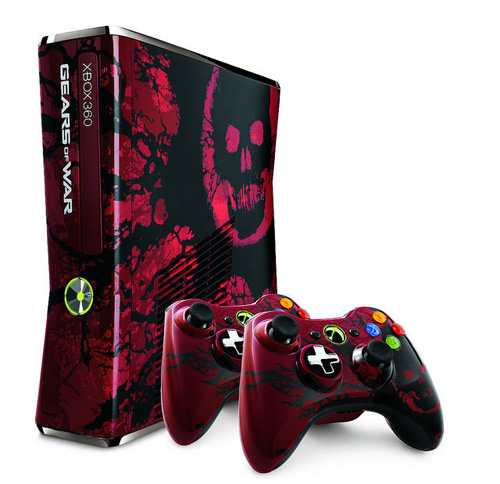
Battlefield 3 was announced for release on October 25, while the epic Mass Effect 3 can be expected on March 6, 2012. While it’s well known that Gears of War 3 will be released on September 20, Microsoft will be supporting its release with a limited edition 320G system and controller, featuring a special GOW 3 skin and custom startup and eject sounds.


The range for Microsoft’s Kinect is expanding, with voice recognition technology featuring in Mass Effect 3 and Ghost Recon: Future Soldier. In fact, Ghost Recon also allows players to customize weapons with gesture and voice. EA Sports have announced a number of Kinect-friendly games including the new Tiger Woods, Madden and FIFA offerings.

Furthermore, the long awaited fighting crossover Street Fighter X Tekken was announced and slated for release in 2012. Boasting new gameplay mechanics and a battle royale tag team environment, the developers are promising one of the most robust fighter lineups ever.

Did you follow E3 this year? What are you most looking forward to?

Wednesday, June 8

In case you haven't played it: Super Street Fighter IV: 3D Edition Review (3DS)


Despite what I've read in recent times, I don't believe the 3DS is a failure. I don't even think that the system launch was a failure. Sure the software lineup was fairly underwhelming, but when you sell a few million units in just over a month, you'd find it hard to argue that Nintendo has failed by any stretch of the imagination. Under-performed? Undoubtedly, but there have been many a console with a sub-par list of launch titles. Super Street Fighter IV: 3D Edition however, is one the undeniable successes of the Nintendo 3DS launch, being the most comprehensive iteration in the fighting franchise's recent history.

The Good
On paper - Super Street Fighter IV: 3D Edition is undoubtedly the most complete version of the critically acclaimed title, Super Street Fighter IV. Featuring all of the characters (including most of the costumes made available as DLC for the home console versions), modes, and capabilities found in the home console versions, as well as new features like Lite controls, game-sharing and a Figurine mode. Not only does the 3DS launch with one of the best fighting games ever released, it does so with few compromises and new content. On paper, SSFIV:3D is an essential launch title and an essential purchase for fighting game enthusiasts.

 World's best fighter + fancy costumes = Winner! 

Faithful - Any portable fighter's viability is subject to the design of the console for which it is being developed. In the case of the Nintendo 3DS, players have three different control options: Lite, Pro with the d-pad and Pro with the circle pad (just in case you are wondering, one does not have to make a definitive choice between pads, you can switch between the two on a whim; or a slip of the finger). Each of these options make for responsive control schemes, each with their own limitations. Lite is explored in more detail throughout this review, however both Pro options afforded me the ability to perform all of my favourite moves with a minimum of discomfort. The only criticism I can make is that the shoulder buttons can be difficult to press in a heated encounter. The 3DS should be home to many a great fighter thanks to its ergonomic design. 

 The 3DS affords enough control methods to make these a regular occurence

High Fidelity - To put it bluntly, I was absolutely blown away by the high connection quality I encountered when I engaged in online competition with this game. Without exaggeration, SSFIV:3D offers the best competitive online experience when compared to its console and desktop brethren. At worst, I would notice a stutter before a fight commenced. For the majority of my online bouts however, I was not presented with a single hitch or instance of lag. Any missteps I made couldn't be attributed to anything other than my own lack of skill or finesse.

At your own pace - SSFIV:3D offers two methods of control for player to adopt, Lite and Pro. Lite controls allow you to macro any four moves from your selected fighter's arsenal to the touch pad, literally meaning that every character's most powerful moves are at a beginner's - or even a lazy veteran's - fingertips. Pro mode is for the purists among us who like to be responsible for delivering specials, EX moves, supers and ultras direct to our opponents without much assistance. Pro mode still allows players to macro certain actions like 3X punch/kick, throws, focus attacks and personal actions to the touch pad; which is handy considering that the shoulder buttons can provide impediment to some of the more sophisticated manoeuvres. The developers have done a great job of providing an entry point for new players, as well as catering to the hardcore community.

Meta-games - The addition of Lite controls has the ability to strip away some of the pretence from some of the more imposing characters on SSFIV:3D's comprehensive roster. The end result is battles that were not previously imaginable, with the rules that balance the game being thrown out the window. Guile can now defend himself from a flurry of hadoukens, Honda can escape from any corner with the touch of a button. Lite controls makes for an entirely different experience.

The Bad
Suspended animation - While SSFIV:3D is a superb-looking portable fighter, the charming background animations present in the home console versions have been removed from each fight locale. This may sound like a petty quibble, but those who have spent any great amount of time with the home console version of the game will be yearning for the laughing children witnessing the fight at the underpass, or the animals peppered across the landscape in the usually visually-striking level, Solar Eclipse. I would have savoured the chance to see these locations in all of their visual splendour, even if it meant removing a feature like 3D Versus which is a distraction at best.

No ne3d - Super Street Fighter IV's brand of frantic, though balanced action is not really enhanced by 3D graphics in any meaningful way. When I first played the game, I'll admit that I found the effect to have impressive depth. Upon sustained play however, I often found myself turning the effect off close to the beginning of a play session, as it is very hard to keep the 3DS level when you're under the pump. My preference would have been for the developers to abandon 3D and perhaps apply the system's processing power towards smoothing the animations and employing some of the home console version's more impressive visual effects.

Any takers? - Upon launch, it was hard to find an online competitor to battle using Pro controls. If I wanted to indulge the hardcore in me, I was destined to fight against those using simplified controls. Any of these battles were over before they began, as my opponents' command of their respective arsenals was too much for me to mount any kind of defence. Perhaps if the developers offer some incentive for players to remove the Lite training wheels we would see more people Fight Like a Man. This problem appears to have been rectified however, as I can now find a fight regardless of my orientation toward a specific control scheme.

The Ugly
Clutch plays - The greatest moments found in any fighting game are those forged in the midst of competitive play; when both players are locked in a close match and one is able to pull off the ultra, the super, or even special moves required in tense situations to grab the win. With the proliferation of Lite controls, the most vital and addictive element of SSFIV's gameplay formula can potentially be lost. Dexterity is no longer a requisite for success, it all comes down to timing and if not that, luck. You can choose to stubbornly stick to the ways of the Old Guard and adopt Pro controls and fight all takers, but rest-assured you will lose, and you will lose badly. Besides how can one prevail when a Flash Kick, or even a Spinning Piledriver is at every player's finger tips? Balance has been banished to memory, with convenience now king in the fighting game genre. What Street Fighter IV did to revive the fighter may just as easily be undone by the simplified control schemes formulated to pander to the casual, and the newcomer. Couple that with Marvel Vs Capcom 3's casual slant and I can't help but fear that Capcom is watering-down its storied fighting franchises to appeal to a wider audience: for better or for worse.

Simplified controls - Will this kill-off the figthing genre's revival?

So long, EX - Players who employ Lite controls may not even be aware that each special move has an EX variant. This is because it makes no sense to macro 3X punch or kick to the touch pad in place of a special or ultra, and it is damn near impossible to press all three attack buttons at the same time. Don't believe me? Then I challenge you to try it yourself. Lite mode not only cheapens the battle, but it dilutes it as well.

Reissu3d - As great as the game is, I must admit that my tolerance for paying full retail price for what is essentially the same game, multiple times has been reached; to the point where my enthusiasm for the Street Fighter IV product itself is beginning to wane drastically. There is no denying that this package presents great value to fighting game enthusiasts, but after Street Fighter IV and Super Street Fighter IV on home consoles and PC, Street Fighter IV on iOS devices and the incoming Super Street Fighter IV: Arcade Edition for all major platforms, one can't help but feel as though the brand is being milked.

The Verdict
8.0/10.0 - Upon reflection, most of my criticisms of Super Street Fighter IV: 3D Edition stem from my fears about where the fighting game genre is headed as opposed to any particular flaws I came across in my time with the game. This is the best portable fighter since Tekken: Dark Resurrection. What you get here is the total package: the core product in Super Street Fighter IV; most of the extra trimmings afforded to the home console audience; new, worthwhile features that integrate functions of the portable console; and now that more people are playing it, the best online experience you can have with the brand. You also get 3D graphics if you're so inclined. Highly recommended, but those who have experience with the home console versions may experience an overwhelming sense of deja vu.